How do we make this system work better—regardless of who is in it?
Beware Bad Selection
Are Politicians Normal or Nuts?
The news reports a continuous stream of office holders having personal problems, divorce, cheating, insider trading, sexual harassment, and a myriad of criminal misbehaviors. Some writers, including Harold Lasswell, Psychopathology and Politics, have wondered whether as a group politicians exhibit greater mental illness. Is there any evidence that shows these issues are worse than among the general population?
1. Where the evidence is strongest: sexual harassment and abuse of power
The National Women’s Defense League reports that since 2006, at least 30 members of Congress have faced public workplace sexual-harassment allegations, totaling at least 53 accusations. Including non-workplace misconduct and pre-office allegations, the count rises to 49 members and 137 accusations. For state government, NWDL reports at least 424 incidents of sexual harassment by 162 sitting state lawmakers since 2013, while warning that actual incidents are likely substantially undercounted.
That is not proof that legislators harass at a higher rate than similarly situated executives. But it is proof that the legislative workplace has a real, repeated, bipartisan abuse-of-power problem.
The comparison problem is that workplace sexual harassment is also common outside politics. The EEOC reported 27,291 sexual-harassment charges from FY 2018 through FY 2021, with 43.5% also alleging retaliation. So the useful conclusion is not “politicians are uniquely depraved,” but: politics creates unusually dangerous conditions for harassment—power imbalance, staff dependence, reputational fear, party protection, and weak enforcement.
2. Corruption and bribery: office creates special opportunity
Public corruption convictions are measurable, but they do not isolate elected officials neatly. TRAC reported 31 new official-corruption convictions in January 2025 alone; the largest category that month was local-government corruption, and the broad category includes federal, state, local, law-enforcement, procurement, and other public-corruption cases.
Cato notes an important caution: DOJ public-corruption conviction data includes elected officials, career officials, and private-sector accomplices; it also depends on prosecutorial effort. Still, analysts estimate that 80% to 90% of public-corruption convictions are brought by federal prosecutors, making DOJ data one of the better imperfect indicators.
The U.S. Sentencing Commission’s bribery data is revealing: among people sentenced for bribery offenses, 85.8% were men, average age was 49, and 90.7% had little or no prior criminal history. Sentences were enhanced in 49.8% of cases for being a public official and in 45.3% for involving a high-level elected official.
That last point matters for GSG: many corrupt actors are not lifelong street criminals. They are often otherwise respectable people who enter systems where discretion, access, secrecy, money, and weak controls combine.
3. Insider trading and financial conflicts: suspicion exceeds proof
Congressional stock trading is a major public-trust problem, but “insider trading” is hard to prove legally. The STOCK Act requires covered officials, including members of Congress and senior staff, to report transactions over $1,000 within 45 days. In the current Congress, CRS reported that at least 25 measures had been introduced to limit or prohibit financial activity by members, spouses, dependents, or congressional employees.
That tells us the risk is recognized institutionally. It does not prove that members commit insider trading at a higher rate than corporate insiders. But the governance point is simple: when legislators can affect industries, receive nonpublic briefings, trade individual securities, and face weak penalties, the system invites suspicion even when no crime is proven.
4. Formal discipline understates the problem
The House has broad constitutional power to discipline members, but expulsion is rare. Since the Civil War expulsions, the House history list shows only three modern expulsions: Michael Myers after a bribery conviction in 1980, James Traficant after corruption-related convictions in 2002, and George Santos in 2023 after extensive fraud-related findings and indictment.
That low number should not be read as “misconduct is rare.” It means the penalty threshold is high, political will is uneven, and many problems are handled through resignation, nonpublic investigation, party pressure, settlement, or voter fatigue.
The House Ethics Committee’s own 118th Congress report shows a large ethics-advice and compliance workload: over 38,000 informal guidance requests, nearly 9,979 financial disclosure statements and amendments, more than 2,775 periodic transaction reports, and 41 separate investigative matters commenced or continued. That is a compliance ecosystem under strain.
5. Personality evidence: politics may attract certain traits
There is research suggesting that political life may attract or reward traits associated with ambition, dominance, narcissism, Machiavellianism, and risk-taking. A 2022 study of German state-parliament candidates discusses the “dark triad” traits—narcissism, psychopathy, and Machiavellianism—and notes prior research finding that political leaders often show high narcissism and moderate psychopathy/Machiavellianism.
The same study found that aversive personality traits were more likely among younger, conservative, and ideologically extreme candidates, but it did not find that “darker” candidates were more electorally successful overall.
So, politics may not turn normal people bad; it may attract some high-drive, high-ego, power-seeking personalities—and then fails to screen, supervise, or sanction them adequately.
Bottom line
While the statistics are unproven that politicians are worse people than the general population, it is accurate to state that public office is a high-risk environment for misconduct because it combines power, money, publicity, weak supervision, factional protection, and poor consequences. The available evidence shows recurring misconduct in sexual harassment, corruption, financial conflicts, ethics violations, and abuse of office—but the best data supports a governance-system failure more strongly than a simple moral claim that politicians are uniquely abnormal.
The problem is not that politicians are drawn from a different species. The problem is that the system selects for ambition, grants unusual power, tolerates conflicts, hides early warning signs, and imposes consequences too late.
Selection or Correction
Systems that invest in selection reduce the need for correction.
Systems that neglect selection become dependent on correction.
Most reform efforts focus on:
oversight
investigations
ethics enforcement
These are necessary — but they are secondary controls.
The primary control in any system is: Who is selected into positions of authority. Pick winners, there's a good chance you'll win. Pick losers, there won't be much to hope for. When selection is shoddy, no amount of downstream correction can fully compensate.
How Weak Selection Occurs
Selection failures in governance are not random. They are driven by incentives. Common drivers include:
Fundraising capacity over capability
Partisan alignment over independent judgment
Name recognition over experience
Network access over demonstrated competence
Low barriers to entry combined with limited screening
Political parties and appointment systems play a central role in this pipeline.
Poor Selection Increases the Burden of Correction
When selection fails:
Oversight systems become overloaded
Ethical violations become more frequent
Institutional performance declines
Public trust erodes
Reform becomes reactive rather than preventive
At-a-Glance Comparison
Strong Selection
Clear entry standards
Competence prioritized
Rigorous vetting
Fewer failures
Limited need for correction
Stable performance
Higher public trust
Weak Selection
Inconsistent entry standards
Visibility and access prioritized
Uneven or superficial vetting
Frequent failures
Constant need for correction
Reactive oversight
Erosion of public trust
Bottom Line
Systems that invest in selection reduce the need for correction.
Systems that neglect selection become dependent on correction.
In any high-functioning organization:
You don’t assume perfect hiring
You build systems to monitor, evaluate, and correct
Government largely lacks this second half.
Poor performance can continue
Misaligned priorities can drift
Ineffective leadership can persist
Without correction, the system depends on:
time
elections
or crisis
None of which are reliable operating strategies. Correction mechanisms — including investigations, hearings, and removals — are:
inherently reactive
often slow and politically constrained
applied inconsistently
By the time correction occurs, the damage is often already done. A system that relies primarily on correction is operating too late in the cycle.
Strengthening Selection: Practical Remedies
Improvement does not require perfection.
It requires raising the baseline standard.
1. Improve Candidate Transparency
Standardized public profiles (background, experience, performance)
Accessible comparison tools for voters
2. Strengthen Party Gatekeeping
Clear internal standards for candidate qualification
Greater transparency in recruitment and support decisions
3. Enhance Vetting for Appointments
More rigorous and consistent vetting processes
Greater disclosure of qualifications and conflicts
4. Elevate Professional Expectations
Clear articulation of role-specific competencies
Cultural expectation of demonstrated capability
5. Expand the Qualified Candidate Pool
Reduce structural barriers to entry
Encourage participation beyond traditional networks
6. Align Incentives with Performance
Public performance scorecards
Greater visibility of outcomes, not just positions
7. Identify Early Warning Signals
Track behavioral and performance indicators early
Address issues before they escalate

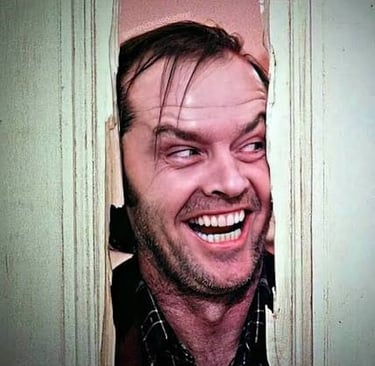
Having to choose between the lesser of two evils is like being in a car about to head off a cliff.
info@goldstandardgovernance.org