
Who Are We Becoming?
Values, Character, and the Search for National Renewal
America remains powerful, innovative, and capable of extraordinary achievement. Yet beneath that strength, something deeper feels unsettled. Across political lines, many citizens sense division replacing unity, noise replacing wisdom, cynicism replacing trust, and power replacing service. People may struggle to define exactly what feels wrong, but they feel it personally.
The nation is being judged every day—not only by economists, experts, or international rankings, but by parents, grandparents, veterans, workers, teachers, and young adults wondering what kind of future lies ahead. People quietly ask themselves: Are we becoming something admirable? Are we governing wisely? Are we passing on something stronger—or weaker—to the next generation?
Our understanding of “the good” usually did not come from politics. It came from parents, grandparents, faith traditions, teachers, hardship, and the example of honorable people. Most Americans can immediately think of someone whose character shaped them. Think of that person. Would they say America is doing well enough? Would they believe we are treating each other honorably, governing responsibly, and building something worthy for our children and grandchildren?
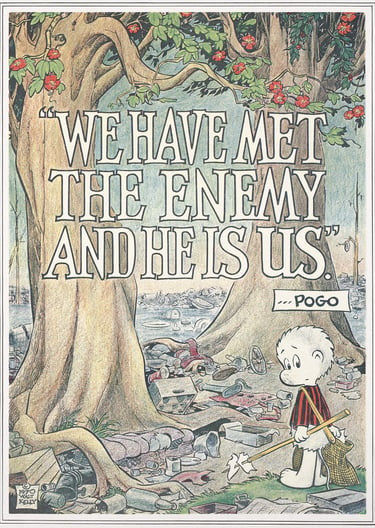
When the question becomes personal, the need for change becomes clearer. This is about more than regulations, elections, or political combat. Beneath every policy debate lies a deeper truth: a nation ultimately reflects the values and character of its people. If citizens lose responsibility, integrity, self-restraint, and shared purpose, no system of laws can fully compensate. Likewise, when leaders pursue power without service, attention without wisdom, or victory without principle, public trust erodes regardless of policy outcomes.
Government is not merely administration. It signals what a society values, what behavior it rewards, and what standards it tolerates. When governance drifts, institutions weaken, confidence declines, and shared identity fragments.
Gold Standard Governance is not only about better management or stronger accountability systems. At its core, it is about reconnecting governance to responsibility, competence, stewardship, service, and measurable contribution to the common good.
Many Americans are not seeking perfection. They are seeking stability, fairness, honesty, competence, meaning, and a renewed sense that the nation still knows who it is.
The deeper challenge before America is not simply whether we can grow economically or compete globally. It is whether we can become a people worthy of what we hope the nation will be.
The renewal of government begins with the renewal of civic purpose.
And civic purpose begins with what we believe is worthy, honorable, and good.
Remember the Titans
Gut Check
A major learning about excellent organizations is that they have a commitment to excellence and a common philosophy that contributes heavily to centering effort and driving success. Read below to see if you share this mindset? If you do there's a decent chance that GSG is a good fit with who you are as a person and that you can make a dent in government renewal.
What is the GSG Mindset?
It's an attitude about life and purpose, management edge and nerve: of being truly committed to highest levels, best in class, and making a difference
Aggressive & relentless pursuit of the goal—hit key outcomes and targets through high performance
Best practices applied housewide, no spottiness—all professions, departments implement “best only”
Specific objectives/accountability—tasks, dates, names. Work è competent people è followup
Toughest measures (no soft data comparisons) & tough-minded eradication of sludge
6.model is valid, reliable & open-ended—the new performance floor
Core Values are Prime Directives, not Options
Rule 1: Get all effort centered on Values.
Whatever the national problem—educational performance, lack of health care, national decline and debt, fading trust—it's root cause is traceable to a lack of Values Centered Managing (VCM). The simplicity of this proposition turns off some, but once understood can be used to revitalize and renew national performance.
Research shows conclusively that winning organizations use their values to build out the specific applications and procedures necessary for the work to be done. While a values list can include many terms and definitions there are three that are core. We don't focus on values because they're "nice". We focus on them because we are determined to win. Values predict outcomes.
👉 RESPECT
👉 SERVICE
👉 EXCELLENCE
Fail to respect others, disregard opportunities to serve, allow mediocre performance—that's a recipe for disaster. When values violators are public officials there are no options except for removal and punishment.
Center all governance on humanity's core values and you will be successful. Violate these core values and you will fail. There are core values that work universally, in any activity, in any setting, whether business, sports, marriage, yes, even in government. These human values are hardwired in us. We gravitate toward them, will work for them, and we hate it when there is damage done in these areas of our lives. If you had good parents, the message basically is to do what your parents told you. People dismiss this message saying it's too simplistic; the truth is, the message is extremely difficult to do. They dismiss it because they aren't willing to do the hard work it requires.
Bottom Line:
Operationally tie the pursuit of values to everything that is to be done. Articulate them, spell them out, and then enforce them. If you want to be in government you must live the values or be removed from your position. Respect, Serve, Excel.
Rule 2: Reread Rule 1.
Friday Night Lights
We Were Soldiers
Reagan - We the People